
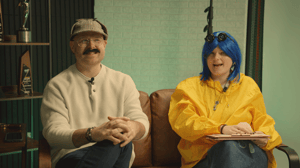
We make podcasts and video series for clients every week. We plan them, script them, film them, and cut them. We had never made one for ourselves.
Now we have. Talk the Walk is Walk West's first full-length talk show. This time we were the strategists, the talent, and the crew. And the client.
Here's why we did it, and what we learned on the other side of the camera.
Why we made it
Two reasons. First, to talk about the work: what we've built, what's working, and what we're proud of. Second, to put faces to the brand.
An agency is a logo, a website, and a list of services. That's not who clients work with. They work with people. Most of what we do runs on relationships: the account executive who sends the timeline, the producer who sets up the lights, the strategist who pushes an idea forward.
We tell clients to show the people behind their brand. It was time we did the same.
Taking our own advice
On the show, Taylor D. Adams, Senior Producer in our Content Studio, shares the two questions he asks every client before production starts. We had to answer them ourselves.
"What do you want to get out of it?" For clients, the answer decides the format: an audio-only podcast, ten vertical 90-second clips built to binge, or long-form brand storytelling. Our answer was faces and relationships. So it had to be something people could watch.
"Why is it video?" Taylor's rule: a video podcast needs a reason to be video, beyond watching people talk. Ours is the people. The wigs, the half-glued Halloween mustache, the candy corn argument. You can't get that from audio.
What we learned on the other side of the camera
Three things we didn't expect:
- Being the talent is a different job. We're professionals, and we're confident in our work. Talking about it while a room full of people points a camera at you is something else. Making that feel fun instead of stiff takes real effort. The nerves are real.
- Interviewing friends takes a little acting. We're coworkers, and we're friends. We already know what everyone's working on. So asking "What have you been working on?" on camera feels a bit silly. We had to play a little ignorant, so the audience hears the answer for the first time.
-
Just be yourself. It sounds corny. It might be overplayed. It's also true. If you know what you're talking about and care about it, that's all that matters. Your personality does the rest.
What's in episode one
Taylor and Media Strategy Lead Lily Cairney host, with our first account team guest, Account Executive Haley McGraw. A few takes worth the watch:
- Non-technical isn't a ceiling anymore. Haley had never written a script. Now she uses Claude to write them and to clean up a large retail client's CRM database. Her first attempt didn't work well. It showed her what was possible.
- Not everything needs to go viral. Lily's hot take: some content exists to live on a brand's page. Chase views too hard and you lose the message.
- Late or forced? We asked what's worse: a brand three weeks late to a trend, or one forcing itself into a trend that doesn't fit. Most of the table said late is worse. A forced trend at least starts a conversation. A late one gets scrolled past.
- Trick or treat. Quick verdicts on AI influencer content, corporate TikTok, LinkedIn personal branding, trending audio, and posting the same creative everywhere. Some were unanimous. Some started arguments.
We also get into the client work keeping us busy: releasing the City of Durham's first podcast episode, filming on-location episodes of Founder Shares for Hutchison LLC, and helping a law and finance firm make LinkedIn video people stop scrolling for.
Plus 30-second Halloween campaign pitches (skeleton patients at an orthopedic office), a candy corn debate, and a shout-out to our web team for their Web Excellence Awards on Gray Whale Spirits.
Watch it
We built this show the way we'd build one for a client. It just happens to star us.